Saturday, March 11, 2017

Blogger and Wordpress don't play well together

This is an old, old blog of mine.  My current blog is at https://timgels.com/

If you've linked here because of the Slice of Life Story Challenge, you can go to my posts here: https://timgels.com/

I'm sorry for the inconvenience!

Tim

Monday, May 21, 2007

Additional Technology Goal

Another technology goal of mine? Figuring out how to manage fonts on my blog...

PDP 1.0

OK, it's time for another new thing. The first year is over tomorrow (!) so it's time to develop the PDP in preparation for next year.

The main focus of my PDP is going to be classroom management (both indicators: time management and student behavior). I realize that if I want next year to be better, I need to come up with a different way of doing things. How does the cliche go? Something about not expecting different results from doing things the same way...

Anyway, I've got the meeting with my evaluator coming up on Thursday. Here are the goals and activities I've devloped so far. I expect that my meeting will give birth to version 2.0 without any major revisions to 1.0. I'm good with that--this is my first time!

PD goal number 1

Develop and implement a classroom/behavior management plan that maximizes instructional time and minimizes behavior and procedural disruptions

Activities

- Complete the Alabama Professional Development module entitled Classroom and Behavior Management

- Attend (Conference Name) during the summer break

- Work with a mentor teacher to develop and implement a written classroom management plan

- Observe different teachers to develop an understanding of their classroom management plan

- Complete a book study on Classroom Management for Elementary Teachers


PD goal number 2

Further develop the technology aspect of my teaching effort to include lesson presentation/ reinforcement, student usage of technology, and communication with parents

Activities

- incorporate UnitedStreaming video material into my lessons

- develop opportunities for students to produce technology-based products

- develop an interactive weblog parent interaction

- develop and implement plans for student produced material utilizing programs such as Microsoft Word, PowerPoint, Movie Maker, Excel, and Photo Story

Saturday, May 19, 2007

Another Nemerov Poem

I don't know what it is about Howard Nemerov education poems...maybe it's his honesty. Do all poets speak the unspeakable for the mute? See for the unseeing?

To David, About His Education

Howard Nemerov

The world is full of mostly invisible things,

And there is no way but putting the mind's eye,

Or its nose, in a book, to find them out,

Things like the square root of Everest

Or how many times Byron goes into Texas,

Or whether the law of the excluded middle

Applies west of the Rockies. For these

And the like reasons, you have to go to school

And study books and listen to what you are told,

And sometimes try to remember. Though I don't know

What you will do with the mean annual rainfall

On Plato's Republic, or the calorie content

Of the Diet of Worms, such things are said to be

Good for you, and you will have to learn them

In order to become one of the grown-ups

Who sees invisible things neither steadily nor whole,

But keeps gravely the grand confusion of the world

Under his hat, which is where it belongs,

And teaches small children to do this in their turn.

Tuesday, May 08, 2007

Good Bye, Molly


May 3, 2007
Throughout the year, my newsletter would often have this cliche (which, I suppose, is why it's a cliche): it's hard to believe...

As this year draws to an end, I'm going to have to dust it off one more time...it's hard to believe that there's only ten days of school left!

Can cliches actually gather dust?

Labels:

Saturday, April 28, 2007

Is it May already?

Wow. The school year is almost over. Incredible.

Friday, March 30, 2007

Checking in with another poem

September, The First Day Of School

Howard Nemerov

I

My child and I hold hands on the way to school,

And when I leave him at the first-grade door

He cries a little but is brave; he does

Let go. My selfish tears remind me how

I cried before that door a life ago.

I may have had a hard time letting go.


Each fall the children must endure together

What every child also endures alone:

Learning the alphabet, the integers,

Three dozen bits and pieces of a stuff

So arbitrary, so peremptory,

That worlds invisible and visible


Bow down before it, as in Joseph's dream

The sheaves bowed down and then the stars bowed down

Before the dreaming of a little boy.

That dream got him such hatred of his brothers

As cost the greater part of life to mend,

And yet great kindness came of it in the end.


II


A school is where they grind the grain of thought,

And grind the children who must mind the thought.

It may be those two grindings are but one,

As from the alphabet come Shakespeare's Plays,

As from the integers comes Euler's Law,

As from the whole, inseparably, the lives,


The shrunken lives that have not been set free

By law or by poetic phantasy.

But may they be. My child has disappeared

Behind the schoolroom door. And should I live

To see his coming forth, a life away,

I know my hope, but do not know its form


Nor hope to know it. May the fathers he finds

Among his teachers have a care of him

More than his father could. How that will look

I do not know, I do not need to know.

Even our tears belong to ritual.

But may great kindness come of it in the end.

Saturday, September 16, 2006

Truth be told

I'm not a major-league blogger.

I do like to watch a good game now and then, though.

Thursday, June 08, 2006

Faithful Friend


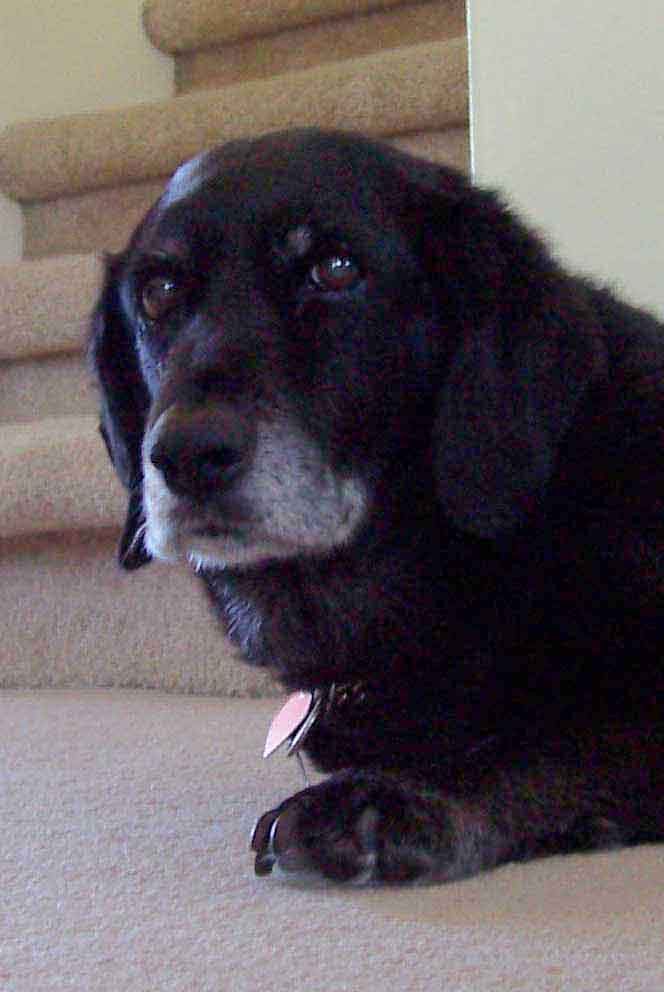
Goodbye, faithful friend. Thank you for all of the years.

Thursday, June 01, 2006

A new start?

A poem to celebrate...

A Spiral Notebook

Ted Kooser

The bright wire rolls like a porpoise

in and out of the calm blue sea

of the cover, or perhaps like a sleeper

twisting in and out of his dreams,

for it could hold a record of dreams

if you wanted to buy it for that,

though it seems to be meant for

more serious work, with its

college-ruled lines and its cover

that states in emphatic white letters,

5 SUBJECT NOTEBOOK. It seems

a part of growing old is no longer

to have five subjects, each

demanding an equal share of attention,

set apart by brown cardboard dividers,

but instead to stand in a drugstore

and hang on to one subject

a little too long, like this notebook

you weigh in your hands, passing

your fingers over its surfaces

as if it were some kind of wonder.

Saturday, October 29, 2005

Notes from the reading conference


           A Book

There is no frigate like a book     
  To take us lands away,     
Nor any coursers like a page     
  Of prancing poetry.     
This traverse may the poorest take       
  Without oppress of toll;     
How frugal is the chariot     
  That bears a human soul!     

Emily Dickinson. 1830–1886


I don’t remember who used that poem during their presentation, but I was glad to hear it again.  I first learned of it during my poetry class with Dr. Miller.  It struck me as wonderful at the time; regrettably, it sort of got lost in the noise.

I did indeed learn quite a bit during the reading conference.  Here are some thoughts, quotes, and ideas in no particular order—this is how they landed in my notebook.

** Gradual release of responsibility.  Chant that with me—it’s how I want to approach my work.  Teachers work too hard—to the detriment of their students.  Why do students run to the bus at the end of the day and teachers crawl home to a comfortable chair (OK, why do they want to crawl home to a comfortable chair)?  

** Program dependency can indicate a lack of teacher confidence.  This is a national problem.

**  Relationships, relationships, relationships…

** My expectations for my students cannot be too high.

** My goal: to be a master of my craft.

** Too many children are being placed in special education.

** Essential conditions for learning:
- Joy and confidence
- Focus on meaning, comprehension, and relevance
- High level of teacher knowledge
- High expectations for all students
- A whole-school responsibility for the achievement of all students

** Teach it first, label it later.

** WRITING EMPOWERS

** High comprehension is associated with lots of non-fiction reading.

** The ability to be (or the characteristic of) self-directed is critical for success with high-stakes testing.  Again: gradual release of responsibility

** There is a huge difference between the abilities of “hundreds of books” kids and “thousands of books” kids.  They need to read.

** Different reasons to read-aloud during the day:
- To build community.  Live together to love together.
- To put language in the air.  If you expect your students to use more than basic language, they need to hear more than basic language.
- To feature poetry.  Poetry teaches fluency—phrase units are built in.  Phrasing improves comprehension and enjoyment (not speed).
- To complement your writer’s workshop.  Read from 2 or 3 selections of advanced work.  You don’t have to read the entire book—just tasty morsels.
- To build bridges across the curriculum.  Build images and vocabulary for other reading and writing.
- To close the day with reading.  Imagine how nice it would be if the last thing your students did before walking out the door was to listen to you read.  Not listen to you correct, discipline, cajole, herd, or manage their departure.  Read.  “OK, there’s the bell…”

** Teach the brain to sustain over a long period of time.

** What you hear them reading aloud is probably what they hear inside of their heads.

** A signal of comprehension is vocal inflection.  Prosody.  A monotone can indicate a lack of comprehension—the student isn’t doing much more than simply decode the words.  

** Model Prosody intentionally.  Use voices; vary your cadence; raise your voice; whisper; exaggerate the use of punctuation.

** Stephanie Harvey reminded us of Donald Graves’ quote: “Teachers are the chief learners in the classroom.”

** Books are quiet friends.

** “Education is to nourish your soul and transform your life” I didn’t get the name for that quote.

** A question to ask after any experience: “How did that change you?”

** Reading comprehension is about gaining the big picture, not the small details.  The details are important, but not the most important thing.

** Reacting to literature is an active process: Stop, Think, React (or respond).

** Reading comprehension is the evolution of thinking…it’s the development of the voice in our head when we read.

** The number one way to process what we learn is to talk about it.

** If the teacher doesn’t monitor comprehension, she won’t know when the students stray from it.

** Follow up a read-aloud with a writing activity.  It improves comprehension, writing, and thinking processes.

** Use post-it notes for an interactive read-aloud.  Who knows why, but kids fill them up.

** Interactive comprehension activities identify student misconceptions.  “No, Johnny, Abraham Lincoln wasn’t a civil war general.”